


Improving health care in peripheral vascular disease: from population-based to individualized decision-making
This project will focus on technologies to enable individualized treatment of fatal forms of stroke and carotid artery disease.

All research projects at MedTechLabs gathered in one place. Here you can explore the patient-centred research on our most serious public diseases – and filter out exactly what you are looking for.
Choose between ongoing and completed projects. Filter on ongoing and completed projects within our programs.
This project will focus on technologies to enable individualized treatment of fatal forms of stroke and carotid artery disease.
The program will combine imaging technologies to detect the onset of epileptic seizures and thus provide better conditions for surgical treatment.
The programme focuses on developing new solutions to understand how brain tissue changes when exposed to diseases such as Alzheimer's, Parkinson's, MS or brain tumours.
Current fetal monitoring methods have weaknesses and the researchers in this new programme aim to improve them to reduce the risk of organ failure in the baby during delivery.
Clinical data, measurements, and patients' own reports are collected longitudinally over the course of inflammatory bowel disease. The project made use of mathematical modelling to try to predict the course of inflammation. The researchers' anticipation was that treatment efforts could be optimised and disease episodes alleviated and shortened through better prognosis of flare-ups in inflammatory diseases.
By analysing large amounts of data from the vagus nerve during experimental inflammation, the project aimed to identify signal patterns that represent inflammation intensity. The goal was to create a lexicon of signal patterns to extract detailed information about the inflammation. The researchers used data available in the literature and their own data to develop machine learning methods, based on auto-encoders and clustering, for identifying nerve signals that can be linked to different cytokines. Pro-inflammatory cytokines are produced by the immune system and secreted in response to injury, stress or inflammation, among other things. The results show that the new techniques are effective for identifying relevant signal types, especially for TNF, but also that there is considerable variation between different recordings and that it is very important to be able to conduct controlled experiments with improved signal quality in the future.The programme was co-directed by Peder Olofsson, Medical Doctor and Professor in Bioelectronic Bedicine at Karolinska Institutet, and Henrik Hult, Professor in Mathematical Statistics at KTH.
There is no atlas of the neurophysiology of inflammation regulation. This is needed to study and understand mechanisms in detail so that treatment can eventually be better targeted. The project developed a method for wirelessly activating specific small peripheral nerves in experimental inflammation and creating an atlas of the functional anatomy of neuronal inflammation regulation.
Research leaders Johan Hartman and Mattias Rantalainen, Karolinska Institutet
Studies and collaborations that link to the projects at MedTechLabs and broaden the field.

The 1MICRON-imaging, an EIC Pathfinder project, develops ultra-high-resolution x-ray sensors for real-time cancer margin detection in surgery, aiming to revolutionize pathology and imaging with faster, more accurate diagnostics.
Here are the stories of how research at MedTechLabs has benefited the patient.
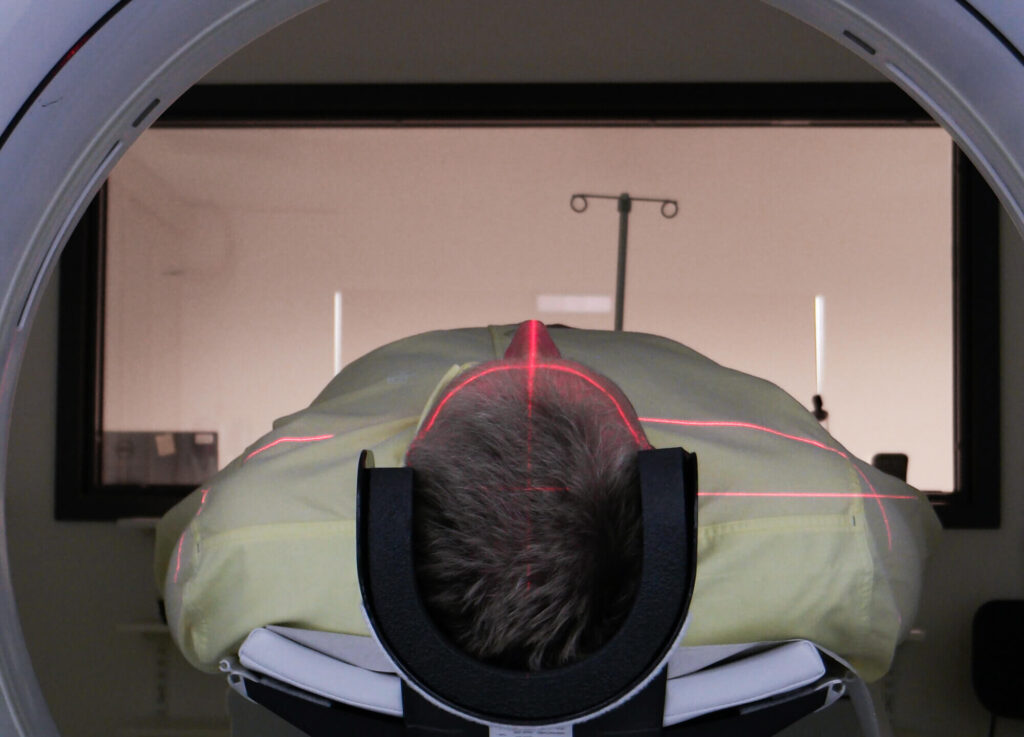
The most extensive example of success from MedTechLabs to date concerns the development of a completely new computed tomography scanner, where the work has been carried out in close collaboration between physics researchers at KTH together with clinical researchers at KI, led by professors Mats Danielsson and Staffan Holmin.